
DECODING THE LYRICS
* * * * * * * * * * * * * * * * * * * *
The Lyrics
* * * * * * * * * * * * * * * * * * * *
[Verse 1]
She was born on a magic island
There's a certain mythology
I was already on the outside
I wanted to be what I wanted to be
She took me to illumination night
To pass on a legacy.
[Chorus]
Crazy ladies in gingerbread houses
Light the lanterns for the shipwrecked sailors
Celebrate the homecoming
Celebrate the moment when
The will to live collides with love
Lights the lanterns everyone
And pray that the rain won't come.
[Verse 2 - Bridge]
She left me with Grace the next year
She went away, I don't know where
Grace got drunk in a Chinese restaurant
So all I saw were the lights extinguishing
I'm going back on illumination night
To see if I can light the lights
[Chorus]
[Instrumental Break]
[Chorus]
* * * * * * * * * * * * * * * *
Two Contrasting Perspectives and a Third Possibility
* * * * * * * * * * * * * * * *
Over the years of Lostwave searching on the various social media forums, there have been two basic perspectives on the meaning of the LTL lyrics:
One group firmly believes the lyrics are about the Martha's Vineyard Grand Illumination Night. They say -- "The meaning is obvious. It's about the Martha's Vineyard Illumination Night. That's sorted. Now let's move on to finding the singer. The lyrics are irrelevant".
Another group believe the lyrics are symbolic, allegories and metaphors, inspirational poetry. From those in this group there have been innumerable interpretations advanced including: LTL is about lost lesbian love; biblical redemption through the Light of Christ; an allegory for losing The Light in One's Life; Grace is not a person but "grace" per se; a movie soundtrack from a children's movie. Just last week I was lambasted for being too literalist -- "The rain is a metaphor. Anyone can see that". But maybe, as Groucho once quipped -- "Sometimes a cigar is just a cigar".
But I'm not denying the song has allegorical undercurrents, rather that it doesn't help the search to dismiss any rationality about the lyrics. There is in fact some coded terminology about institutional ritual embedded in there.
My Perspective. Dissenting from both the above perspectives, I have long believed that (i) the lyrics are both literal and research-relevant to finding the singer and players, and that (ii) the story told has nothing to do with Martha's Vineyard Massachusetts. This has become a kind of blasphemy in the Lostwave community. So I've now split from such forums to concentrate on serious factual research instead of dismissive and superficial guesswork.
I believe we must use all the cryptic telltales of information in the lyrics plus the musicality of the song itself to piece together this vintage jigsaw puzzle to eventually identify the singer.
For deeper context about the
Songwriting - See Page 8,
Instrumentation - See Page 9,
Recording Production - See Page 10,
Definitive Dating of the song - See Page 11.
But first we must deal with the elephant in the room.
* * * * * * * * * * * * * * * * * * * * * *
Why the Martha's Vineyard Grand Illumination Night
Has Nothing to do With Light the Lanterns
* * * * * * * * * * * * * * * * * * * * * *
This is a particular bugbear of mine -- the persistent belief and repetition all over the web that the lyrics of LTL describe the Martha's Vineyard (MV) Grand Illumination Night event. It is demonstrably untrue, as the following analysis clearly proves.
Six years ago, adherence to the MV scenario flooded the search community simply through Googling the terms: island, Illumination Night, gingerbread houses, lighting lanterns. And yes, they got MV hits matching those 4 terms. It's an easy conculsion to jump to. Case solved, eh?
So over the intervening period, every web link about LTL propagated this belief. It became an unarguable fact. But this is a classic example of "internet truth by popularity", and has nothing to do with accurate research and deductive analysis.
But in fact, the supposed Martha's Vineyard connection to LTL is a simplistic, coincidental red herring. It is clear that people who believe there's a connection have never actually looked into all possible explanations for the lyrics. They have never unlinked Martha's Vineyard from all the other telltale signs in the lyrics which clearly point elsewhere.
Below are 9 fully researched, factual reasons why the MV explanation is just not feasible. Note: The song lyrics are quoted below in bold italics.
1. Statements from Institutions, Locals, and Authors
- The Martha's Vineyard Historical Society and the Martha's Vineyard Camps Meeting Association have replied to numerous inquiries from LTL searchers confirming that the song lyrics have no historical or present day relevance to their event. Their Mission Statement for their Grand Illumination Night is: "To perpetuate our religious and historical heritage, engaging all in education and spiritual growth in a welcoming faith community".
- From just a cursory listen, it is patently clear that the Mystery Song's whole lyrical context -- the somber tone, the specific lyrics about "shipwrecked sailors", "crazy ladies", "an extinguishing legacy", "the homecoming" -- just do not align with the MV event. [See Refs #1 and #2] These explain the primary motives and original foundation history for the MV Grand Illumination Night as recorded since 1835 and still propagated today. If you read these official explanations, it just makes no sense to think that MV has anything to do with LTL.
- The Martha's Vineyard Grand Illumination Night participants -- actually only 315 of the 11,300 houses on the island in 6 streets near "Tabernacle Headquarters"; which is a mere 10% of the village of Oak Bluffs; which is only 0.7% of the island land mass; and 1.5% of permanent island residents (315/20,500) -- are all well-known to each other within their tight-knit religious community. Any song written about their neighborhood event would have been immediately relatable to the community. Some of those MV locals have been approached but none have acknowledged any connection with the song's lyrics. It makes no sense to them. Lostwave posts mention asking an MV Radio Station, a local band, a nearby recording studio. Dead ends. All of them.
- Novelist Alice Hoffman has confirmed to several inquirers that the song has nothing to do with her 1987 novel, Illumination Night. Her book is a work of fiction set on Martha's Vineyard, using the island's annual Grand Illumination Night as a backdrop for a story about her characters' relationships. While she acknowledged the coincidence of the name, she saw no link to either her work or the MV ceremony she knows well. [See Ref #3]
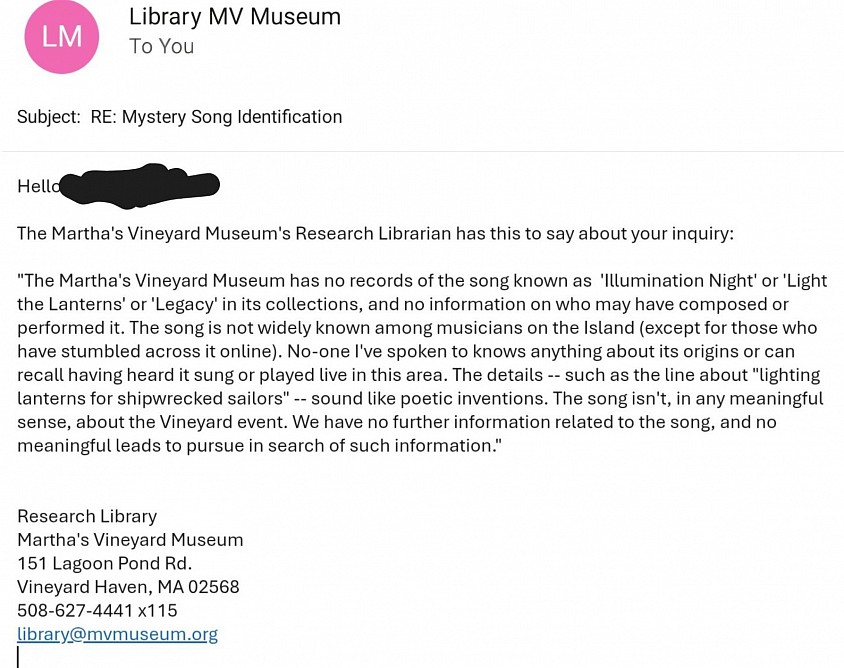
MV Historical Museum said: "Not about MV In Any Meaningful Sense"
2. The Tone and Specific Purpose of the MV Event and The Song Narrative are Complete Opposites
- The Martha's Vineyard event is a grand, public, end-of-summer celebration that attracts thousands of people, started in 1889. It's an advertisement for the Methodist community spirit, underwritten by the Martha's Vineyard Camps Meeting Association. [See Ref#1 and Ref#2]. It is an annual tourist attraction which has nothing but grown in attendance over its 136 year history.
- The LTL song lyrics describe (at least overtly) an intimate and enigmatic story involving three women, a Chinese restaurant, and some under-the-radar lantern ritual. The song's story is both celebratory and tragic, befitting some far smaller illumination night that was in danger of being forgotten, unlike the thriving MV celebration.
- Whilst Martha's Vineyard does have a little known mythology from ancient times, it relates to the supernatural powers of a 10,000 year old giant who carved up the bay with his foot and killed whales on the red cliffs. The Farallones has 3 historical seafaring cultures who have feared its rocks as The Devil's Teeth, and the Islets of the Dead.
- Whilst Martha's Vineyard is an island with maritime history and 70 shipwrecks in the area, records list 1826 to 1992, despite having a lighthouse. The shipwreck history of the Farallones lists 400 wrecks over 400 years, mainly due to sub-surface reefs, tides and storms.
- The song's thematic focus on "shipwrecked sailors" and celebrating them, clashes with context of the MV community history and mood. The Oak Bluffs event is about community building and fun, sharing cookies and lemonade on the verandahs, sing-songs and hymns in the Tabernacle.
- Just look at the pictures below of the cute technocolor cottages by day and night. Do you seriously think the Chinese restaurant singer is talking about THIS illumination night? Do these kitsch gingerbread houses represent the mood of a dying lantern CELEBRATION for shipwrecked sailors? It just makes no sense.
3. The Type of Lanterns Used and Their Lighting Method Are Totally Different
- At Martha's Vineyard, the event involves thousands of colorful Japanese and Chinese paper or silk lanterns which are often heirloom items passed down through generations. [Ref #4]
- While the tradition of the Grand Illumination (which began in 1869) originally involved candles or oil lamps inside paper lanterns, the switch to electric lights began soon after electricity became available in the early 20th century.
- By the 1960s, safety was paramount due to the dense concentration of old wooden cottages in near proximity. Following the post-World War II commercial boom, strings of electric Christmas tree lights were widely available and affordable for general decorative use .
- Although, some traditionalists may have still used candles up until Council fire regulations banned them in 1974. Since then, all the delicate paper lanterns and highly flammable wooden cottages have been illuminated with electric light strings.
- The Martha's Vineyard event involves the ceremonial lighting of the first lantern in the Tabernacle -- an ancient Judeo-Christian custom -- which then prompts everyone to turn on their pre-strung electric lights simultaneously. It is a coordinated, mass illumination, an easy "flick of a switch" moment for the thousands of lanterns, in a pre-planned lighting display. The illumination night mentioned in the song was about actually "lighting the lanterns", not switching them on! [See Refs #5 and #6]
- In the song, the lyrics "to see if I can light the lights" implies a personal struggle with the light sources for the singer. Whatever lights she is talking about, she clearly draws the distinction between her own competence and that which the older, "crazy ladies" on some mysterious magic island would have had no trouble with.
- Furthermore, if they were kerosene lamps, they are not always easy to light in the wind or rain, say on an exposed seaside bluff -- hence her lyrics "pray that the rain won't come" is a premonition that the whole occasion might be snuffed out if she fails in her mission to "light the lights". The rain is not going to inhibit the switching-on of the lights at Oak Bluffs. It just makes no sense.
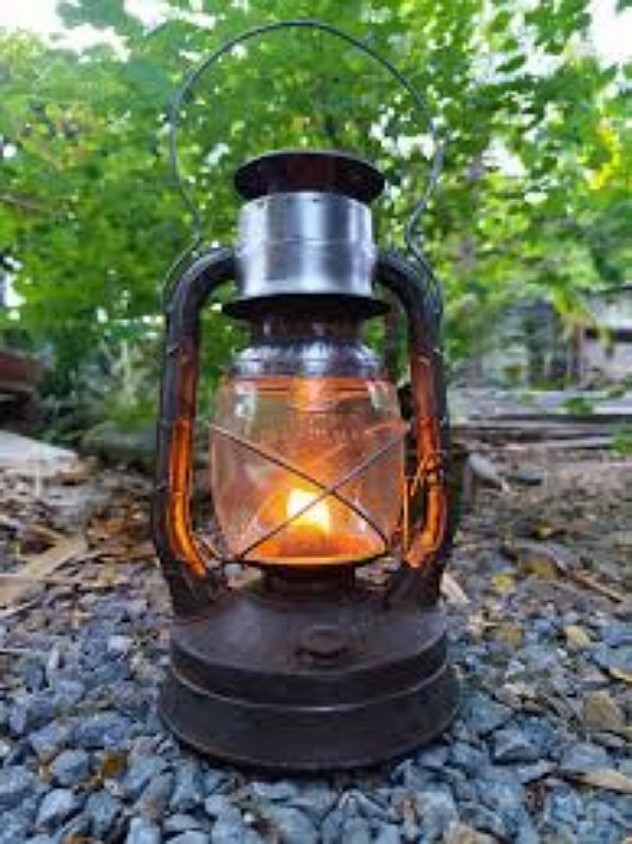
The Classic Kerosene Wick Lanterns, familiar to all those born before the War, but a tricky novelty to younger ones born into the suburban electric era.
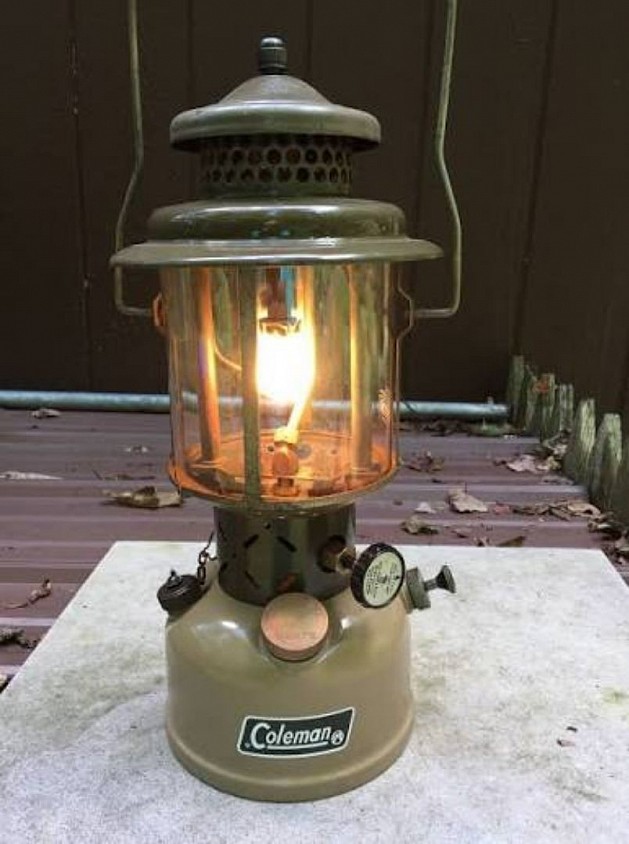
Military and Coast Guard issue Pressure Mantle Lamps, known as extremely tricky for the novice. Affectionately known as "a bomb in a box"! They could squirt a flame of kerosene 2 metres across the room if not handled correctly.

The typical inside Kerosene Wick Lamps that many households lived with before and during the war. They would certainly not have been taken down to the rocky foreshores for the shipwreck rescue.
4. The Term Gingerbread Houses Can Have Very Different Cultural Meanings
- The modern understanding of the term "gingerbread house" suffers from a profound cultural split. To many, the phrase invokes either the edible confectionery derived from 19th-century German folklore or the hyper-decorated, multi-colored resort cottages of Oak Bluffs on Martha's Vineyard. But this dual association has effectively monopolized the term, obscuring a much broader and more austere architectural heritage that spans the American continent. At Martha's Vineyard, yes, the cottages are called "gingerbread houses". But they merely play a theatrical part in a kitsch religious context.
- In reality, millions of Americans reside in what they affectionately call "gingerbread houses". During the mid-to-late 19th century, the Carpenter Gothic style became a dominant architecture style across the United States. Steeply pitched cross-gables, board-and-batten siding, and pointed-arch windows were adopted not for whimsy, but for functional, vertical elegance and structural economy. Along the California coast, for example, numerous historic lighthouse keepers' quarters were constructed in this exact style to withstand harsh coastal weather where shipwrecks might occur.
- The singular interpretation of gingerbread houses having to mean the dressed-up confectionery style like MV is downright infantile and makes no sense in the context of the song's lyrics.
- And as we shall see, photographic evidence for the real gingerbread houses where the crazy ladies lived will be revealed on the following page.
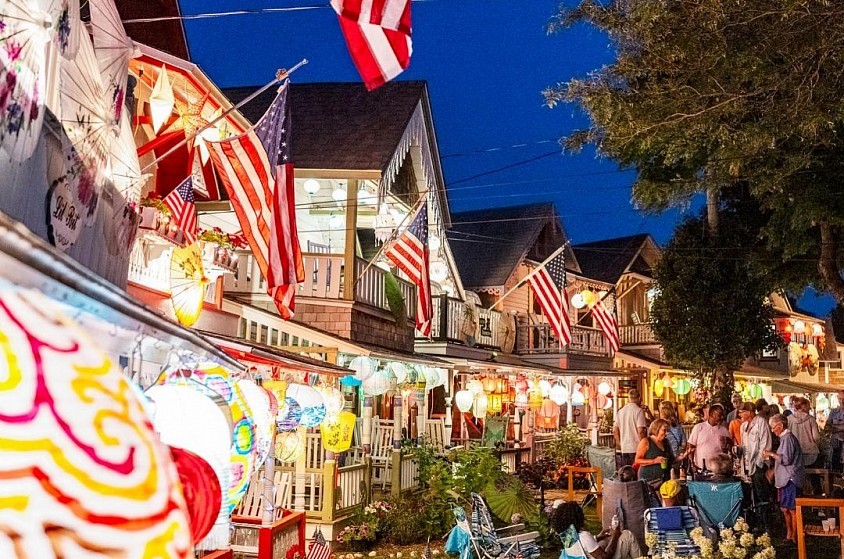
This sure looks like a great way to celebrate shipwrecked sailors on the Grand Illumination Night. /sarc

The Early 1900s German Lebkuchenhaus. Are these the gingerbread houses where the crazy ladies lived? /sarc
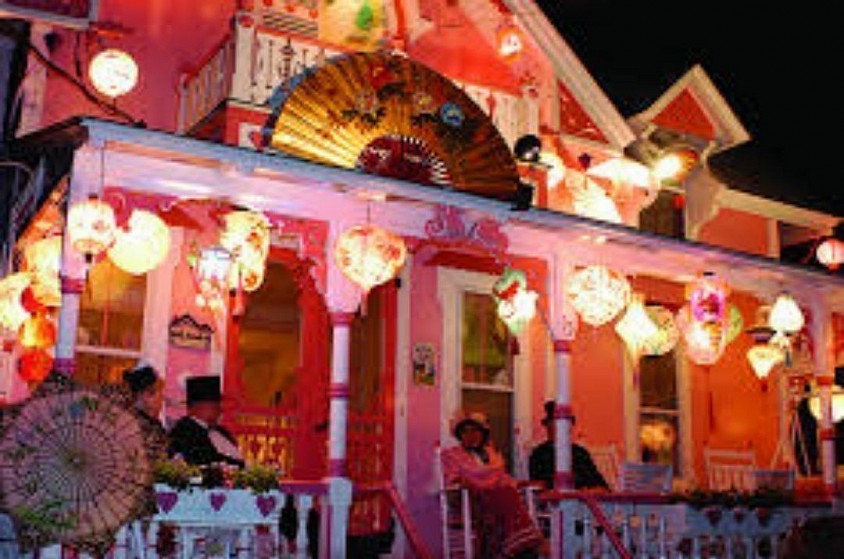
Crazy ladies and crazy men sitting on the verandah to celebrate the homecoming, the will to live colliding with love, in their Methodist celebration about to die out, and requiring a rescue mission to save it coordinated with a drunken "Grace". /sarc
5. The Public Notoriety and The Dying Lights in LTL are Completely Incompatible
- The Martha's Vineyard Illumination Night event was originally a commercial venture in 1869 to promote the locale of Methodist holiday making. It is nowadays a non-profit social event, focused on neighbors sharing cookies and lemonade on their verandahs. It is a high point of the summer social season.
- But the illumination event mentioned in LTL is clearly a more private event, possibly a family affair, and with a specific purpose. It suggests the celebration of something heroic, folkloric -- that is a homecoming and a shipwreck.
- Its tragic thread is that this celebratory tradition, the allegorical "light of remembrance" was dying out --"All I saw were the lights extinguishing". For 3 consecutive years, the women in the Chinese restaurant clearly felt their small, barely patronized memorial gathering needed passing on.
- Both these sentiments are the complete opposite of a robust, social event like the Martha's Vineyard Grand Illumination Night which has run for over 150 years.
- The Martha's Vineyard community event is anything but a dying light. It is a vital, thriving tradition that continues to this day, stronger than ever. No-one would or could ever need to "pass on the legacy" of the MV Grand Illumination Night. It just makes no sense.
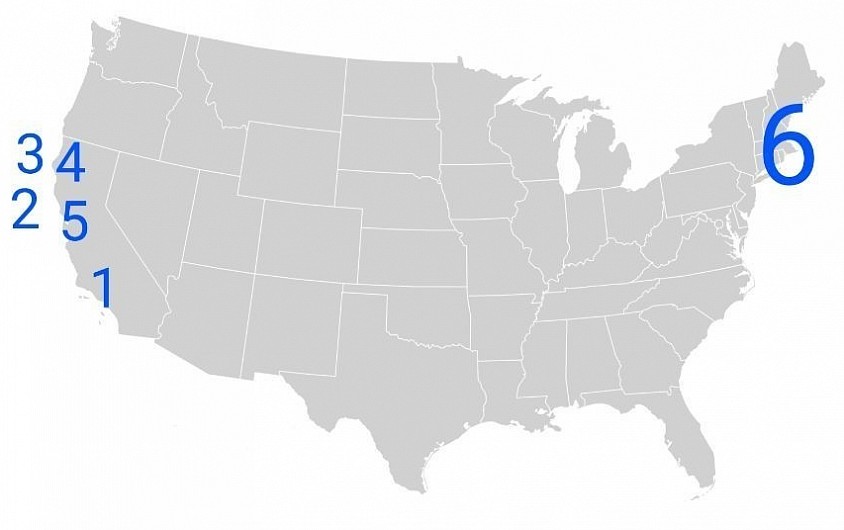
The Geographical Absurdity
6. Geographical Dislocation and Logistical Absurdity
As shown next page, these are the locations for the context of song:
(1) The LTL demo cassette tape was found in an LA office. [FACT]
(2) She was born on Farallon Island [FACT]
(3) She grew up at Pt Cabrillo Lighthouse [FACT]
(4) The Chinese Restaurant was in Fort Bragg [FACT]
(5) The song was produced within the San Francisco Sound [FACT]
(6) Martha's Vineyard is 3000kms away from numbers 1-5. [FACT]
- It is easy to deduce that the singer/band were most likely from the San Franciso music scene canvassing for a recording deal in LA. That is what every wannabe music star did in those days. It just makes no sense that a West Coast artist -- living far from MV, writing about a hyper-local East Coast holiday event would record such a song, and then promote it in LA.
- Since the tape was found in LA, and the singer was "going back on illumination night", was she making music on the West Coast and intending to travel 3,000 miles for a one-night, supposedly-dying event which she had been to on the first year?
- Or did she and the other 2 women live near MV and then mysteriously left her demo tape in LA where the song would have had no cultural significance to Martha's Vineyard?
- The singer says "she took me to illumination night." Did "She" pay for two flights LA to Boston for a look at a bunch of electrified candy-houses with thousands of other local tourists, and came away thinking: "Yeah, this 150-year-old celebration needs saving"?
- And why would it be Grace or "She" who had the authority to"pass on the legacy" of the Martha's Vineyard Grand Illumination Night to some hippie troubadour one night in a Chinese restaurant? It just makes no sense.
- The song lyrics, clearly being about a small, private, even secret illumination event, belie any likelihood that its participants would travel any great distance to participate.
- In summary, any geographical or cultural connection between Martha's Vineyard and Los Angeles just makes no sense.
7. The Climatic Details Do Not Align
- The MV Grand Illumination Night is held annually in mid-August (a dry summer month). The event is almost guaranteed good weather.
- But the lyrics "pray that the rain won't come" suggests an anxiety about weather conditions, which makes no sense for the typical mid-summer conditions of MV.
- Besides, MV has a back-up day just in case it does rain on the 3rd Wednesday in August when their Illumination Night is annually scheduled. [See Ref #7]
8. The Term "Homecoming"
What is this word doing in a song about Martha's Vineyard you might ask. In common American parlance, homecoming can mean either of two events:
- An annual autumn collegiate and high school football tradition where alumni return to their alma mater, featuring a parade, a pep rally, the crowning of a Homecoming King/Queen, and a formal dance.
- Or a military repatriation. Other institutional terms might be "returning veterans". "Celebrate the homecoming" of the "shipwrecked sailors" is clearly the latter meaning here.
- Furthermore, a ship returning from the Pacific travels Eastwards to strike the seaward side of the Farallons (as it did); an Atlantic troop transport approaching Massachusetts would be traveling from the exact opposite direction. And besides, troop repatriations from WWII Europe always docked in New York.
- Thus Martha's Vineyard has no relevance to any homecoming.
9. The Term Illumination Night
- It should by now be crystal clear to anyone endowed with critical thinking that we are clearly talking about two different illumination nights. Whereas the MV event is capitalized as a very special event, "Illumination Night", I would bet that the one mentioned in the song was simply penned as "illumination night", lower case, a less formal thing amongst those who knew of it, as befitting 3 people trying to prevent its impending demise, including one event in a Chinese restaurant where the ritual's matriarch got drunk.
- It may not even be a term that her hosts used themselves. It could have been the singer's own poetic nickname for what she had witnessed -- just the once. I might just as well arrange an annual get together with beer and sausages around my barbeque amongst Tiki Lanterns each year and call it "my little illumination night". It may not have had that name in the mind of anyone other than the singer-songwriter.
- So it is not really surprising that the term cannot be found in any historical records elsewhere in the country. That doesn't mean it didn't exist. It just means it was too small and under the radar. Not surprising that the internet (started in ~1994 for the general public) never logged it!
- It is a reasonable deduction that the illumination night mentioned was an annual event. She sings "I'm going back ON illumination night". ON illumination night, not TO illumination night, or FOR illumination night. Meaning it was a fixed calendar date. On the next page, you will discover why I have concluded it was May 31st.
- The term illumination night has been used over millennia in innumerable memorial and celebratory settings. This is the fundamental flaw made by all those who have attached to the MV event. They Googled the term and, as Google often does, it tossed up the most popular return in their own culture and time. For a broader view, try this AI search: "What are the global and historical origins of public lighting celebrations, including terms like "illumination night" and "lighting the lanterns"? You'll see that the many returns start from Noah's time, the Han Dynasty, West African slaves, The Masonic Rituals. The Martha's Vineyard Camp Meeting Association (MVCMA), who run the Grand Illumination Night, don't have any ownership on such ceremonies or naming rights.
* * * * * * * * * * * * * * * * * * * * *
Page Conclusion -- A New Direction
* * * * * * * * * * * * * * * * * * * * *
The weight of these 9 wholly factual and lyrical contradictions makes it impossible to sustain the Martha's Vineyard theory, other than by 4 minor lyrical coincidences. The narrative elements of the song simply do not align with it in any way. As well, my insistence that the whole Martha's Vineyard connection should be abandoned is based on the evident fruitlessness of that proposition. Over five years of diligent searching by thousands of fans, not a shred of real life connection to Martha's Vineyard has turned up. Is it not wiser to look elsewhere in the USA for an island, some lighting of lanterns, some gingerbread houses, some lesser-known illumination night? That's what real research truly is. You don't lock-in to one theory if the facts contradict it.
So, the big question remains:
What DO all the lyrics in this mysterious song mean?
The key to every word and phrase above lies in one specific, well-documented and overlooked act of heroism from the 1940s on the California Coast. It involves a family of "light-keepers" whose personal tragedies culminated one night in front of an idealistic young hippie troubadour who has since disappeared into the mists of time. The next page provides the verified historical details that finally solve the song's central thematic riddles:
What magic island?
What shipwrecked sailors?
What was the homecoming?
Who was Grace and who was the She in the story?
Who were the crazy ladies?
What was the true Illumination Night all about, and why was it dying out?
Why did the three woman feel they needed to save it?
And where was the Chinese Restaurant?
